
Generator: what size do you need?
How to calculate the power you need, the difference between kVA and kW, and when you need 400 V.
Short answer: add up the power of everything that will run at the same time, and add extra for anything that starts with a motor. For tools and a stand, a small Honda generator is enough. For construction heating, welding or a whole event, you need a 40 kVA generator.
Our generators
| Generators | Power | Suitable for |
|---|---|---|
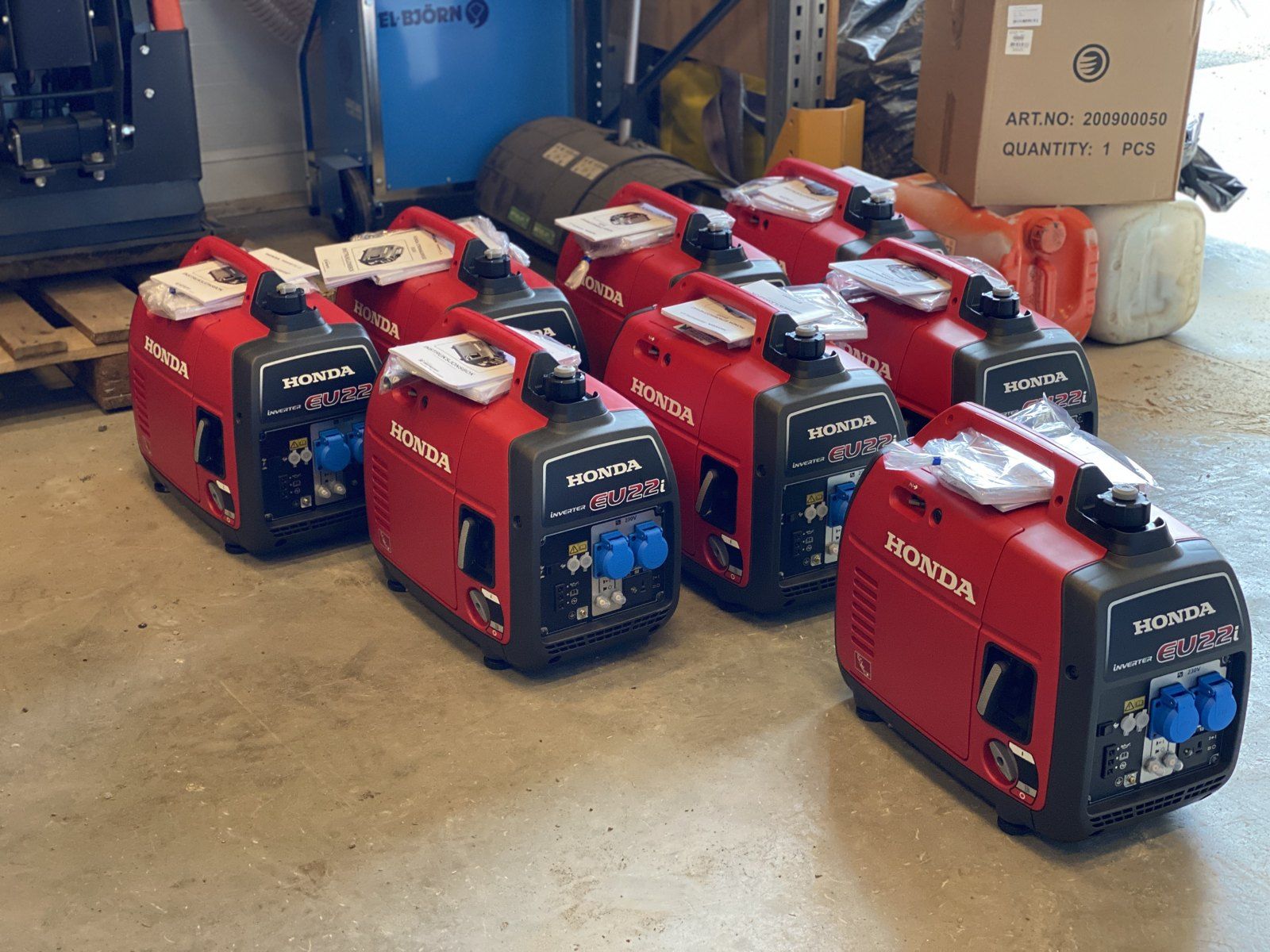
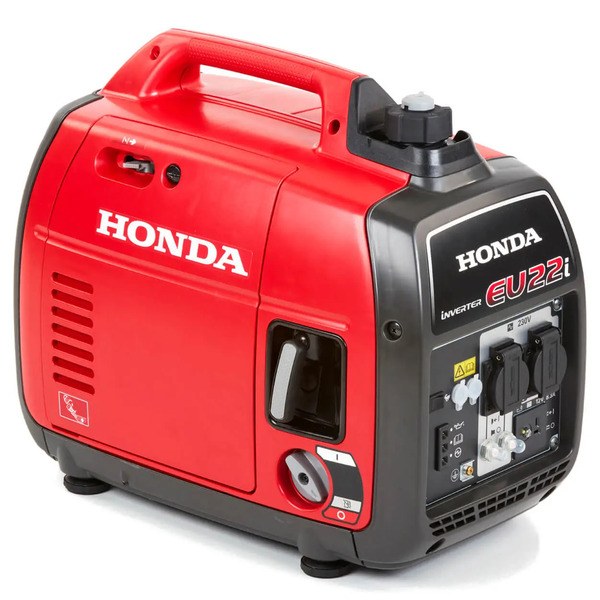
| Honda EU22i | 2.2 kW, 230 V | One stand, lights, charger, small tools |
| Honda EU30 | 3 kW, 230 V | Hand tools on a building site |
| Honda EU70i | 7 kW, 230 V | Catering trailer, event office, several tools |
| Atlas Copco QAS 40 | 40 kVA, 400 V | Construction heating, building sites, events, standby power |
| Atlas Copco QAS 45 | 45 kVA, 400 V | Same, with a bit more headroom |
The Honda generators are inverters and deliver stable power that is safe for computers, tills and card terminals.
How to work out what you need
- Find the power rating of everything to be connected. It is on the rating plate, in watts or kW.
- Add up everything that will run at the same time.
- Add the starting current. Anything with an electric motor, such as compressors, saws, pumps and fridges, draws 2–3 times as much at the moment it starts. Start one thing at a time.
- Leave some headroom. The figure on the generator is the maximum. Over time you should stay below around 80%.
kVA or kW?
The large generators are rated in kVA. To find kW, multiply by 0.8. So the QAS 40 gives 40 × 0.8 = 32 kW.
230 V or 400 V?
Ordinary tools and lights run on 230 V. Construction heaters, large compressors and welders need three-phase power. Our construction heaters come in both 230 V and 400 V – blue and red connector – so let us know what you have on site. If you're using a generator, the QAS is what you need.
Too big isn't good either
A diesel generator that runs for long periods at under 30% load gets clogged with soot. It's not wise to take the biggest one ‘just in case’ when the need is small.
Safety
- Never indoors. The exhaust contains carbon monoxide, which kills. Place the generator outdoors with at least one metre of clear space around it and the exhaust pointing away from people.
- Earthing: the large generators must be earthed with an earth spike as close to the generator as possible.
- Never connect it to a building's electrical installation unless an electrician has fitted a changeover switch. Otherwise it can feed power out onto the grid.
- Never refuel while the generator is running.
- Hearing protection near the large generators.
Cables and distribution
For events we also rent out distribution boards, cables from 16 to 125 A and cable protectors, so the power gets safely to where it's needed. See power for events.
Questions and answers
What size generator do I need for construction heating?
Electric construction heaters of 6, 9 and 18 kW run on three-phase power. We have them for both 230 V and 400 V (blue and red connector). For these you need the QAS 40 or 45. Add up the output of all the heaters.
What is the difference between kVA and kW?
kW is what you can actually use. For the large generators, kW = kVA × 0.8, so 40 kVA gives 32 kW.
Can I use a generator indoors?
No. The exhaust contains carbon monoxide, which is lethal. The generator must stand outdoors with the exhaust pointing away from people and doors.
Is the generator safe for computers and card terminals?
The Honda generators are inverters and deliver stable power that is safe for electronics.
Equipment in this guide
Honda EU22I
See product →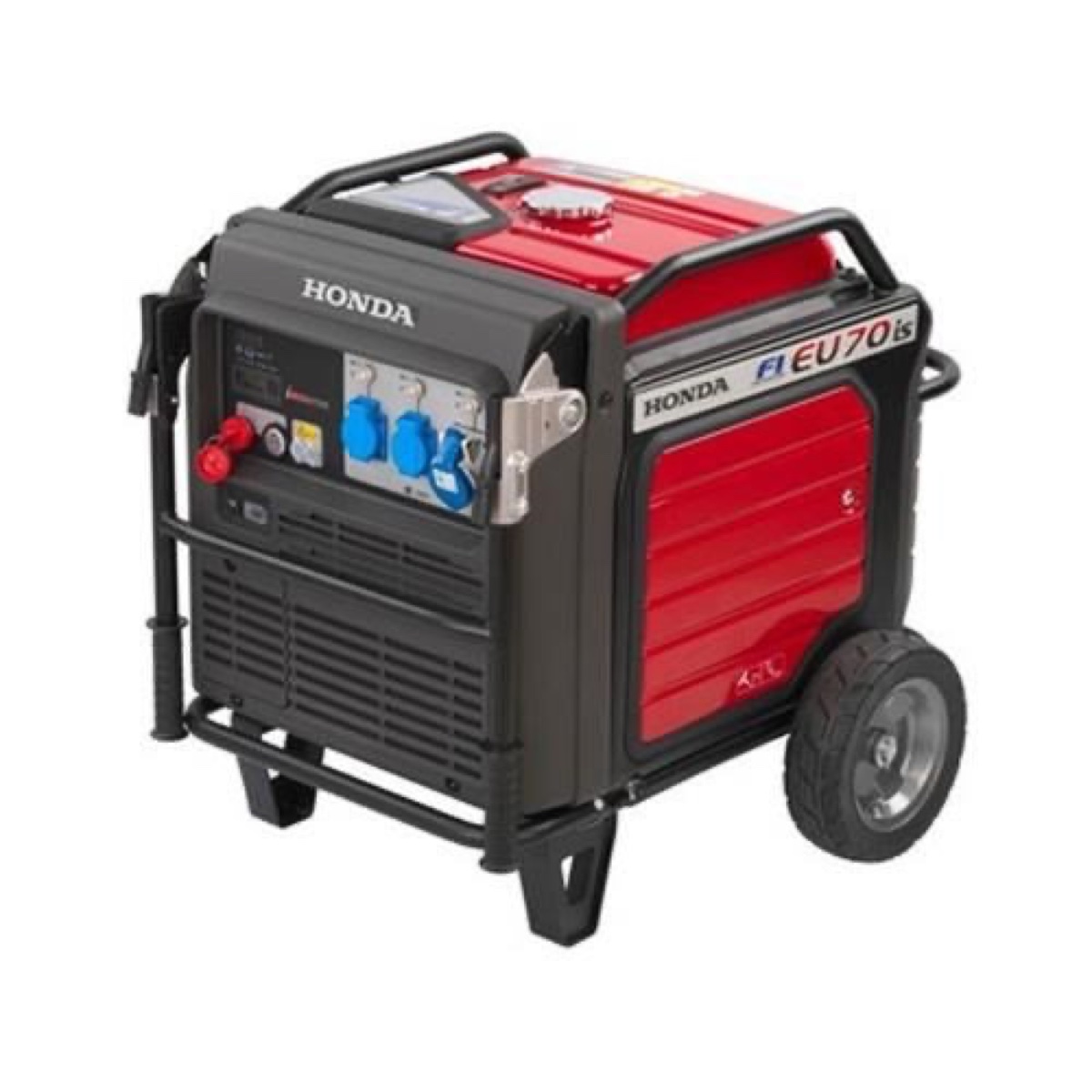
Honda EU70i
See product →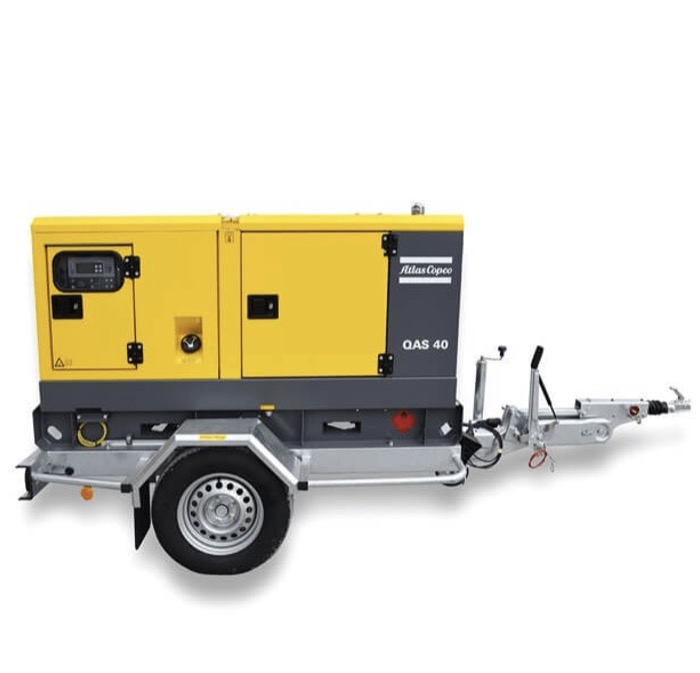
Atlas Copco QAS 40
See product →
Atlas Copco QAS 45 generator 45 kVA on trailer
See product →Any questions?
Call +47 948 87 000 and you'll speak to the people who rent out the equipment every day. See the generators →
More guides
What size mini excavator do I need?
1, 1.9 or 2.7 tonnes? Digging depth, space and transport decide. Here is the choice, job by job.
Excavator hire prices
What it costs to hire a mini excavator or excavator, what is charged in addition, and how to keep the price down.
Why you should take a lift course
When the law requires a course, what the course covers, and why it pays off even when it is not mandatory.