
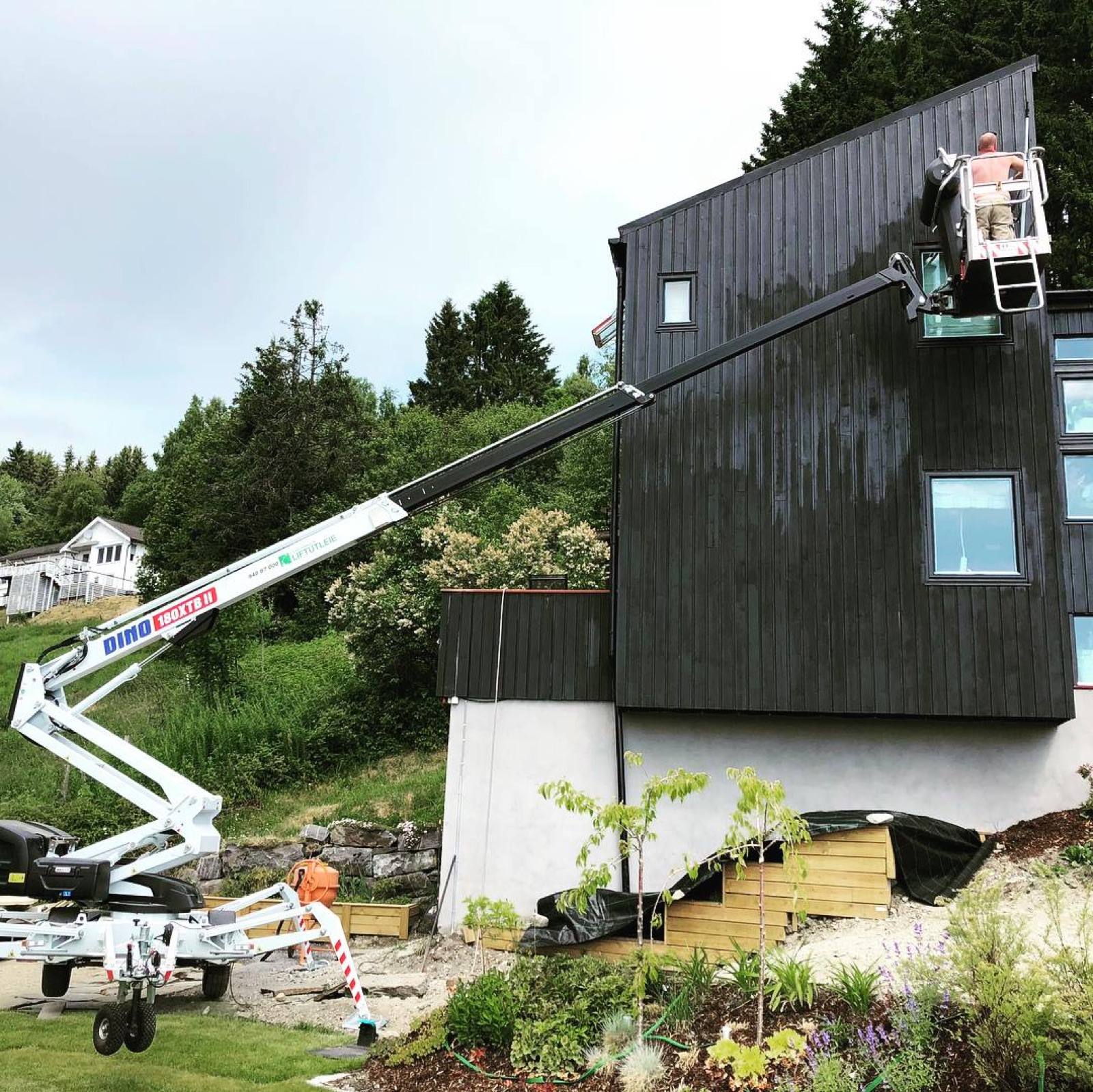
Height and outreach: how to read the lift chart
The chart on the lift shows exactly where the platform can reach. Here is how to read it, and how to check whether the lift will reach.
Every lift has a working range chart. It is on the lift itself and in the data sheet, and it shows exactly where the platform can go. If you can read it, you know before you order whether the lift will reach. It takes two minutes to learn.
How the chart is laid out
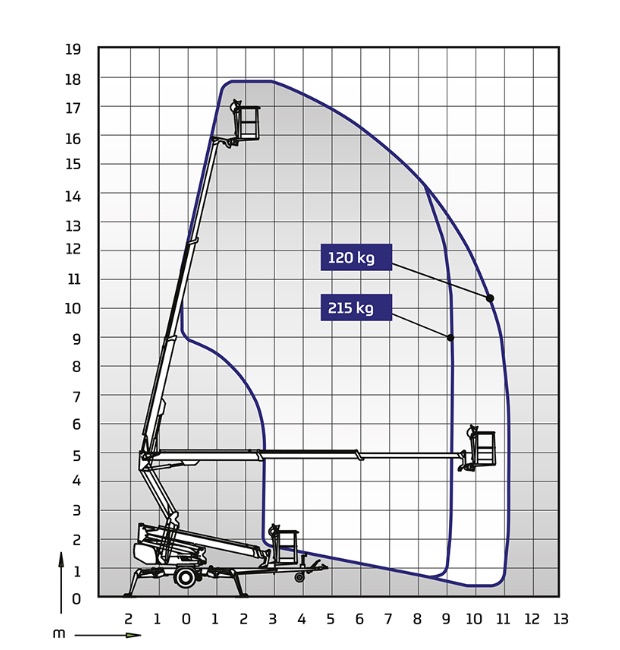
- The vertical axis is working height in metres: the platform floor plus about 2 metres, in other words how high you can reach with your arms.
- The horizontal axis is the distance out from the centre of the lift, where the arm rotates. Figures to the left of zero are behind the lift.
- The shaded area is every point the platform can reach. You cannot get outside the area, however you drive the arm.
A real example: Dino 180XTB
This is the chart for our 18-metre trailer lift. Three things to note:
You only get full height close to the lift. You reach the full 18 metres when the platform is 1.5–3 metres out. Go further out and the top drops.
You only get full outreach low down. Fully out at 11 metres, you reach around 8 metres high, not 18.
There is a dead zone. Right next to the lift, from 2 to 9 metres up, the platform cannot reach. If you need to work low and close in, the lift has to stand further away.
The load changes the outreach
Look at the two lines in the chart above. With 120 kg in the platform, i.e. one person with tools, the Dino 180XTB reaches 11.2 metres out. With 215 kg, two people, it stops at around 9.2 metres.
If there will be two of you in the platform, you must read the inner line. That is the one people most often overlook.
How to find out if the lift will reach
- Measure the height to the highest point you will work at.
- Find out how close to the wall the lift can stand. Patios, flower beds, steps and cars take up space.
- Add about 2 metres. Distance in the chart is measured from the centre of the lift, and with the outriggers out the lift is 3.5–4.3 metres wide. So the centre is around 2 metres inside the foot.
- Find the point in the chart. It should be well inside the area, not on the edge.
Example: the gutter is 7 metres up, and in front of the wall there is a 3-metre patio. The foot then stands 3 metres from the wall and the centre around 5 metres out. You need a lift that reaches 7 metres high at 5–6 metres out, plus the little bit in over the gutter.
If you need to go up and over something, like an extension or a carport, you need an articulating boom lift. Read more in Which lift should I choose?
Our trailer lifts
| Model | Height | Outreach | Weight |
|---|---|---|---|
| Dino 105TL | 10.5 m | 6.5 m | 950 kg |
| Omme 1300 | 12.8 m | 9 m | 1,650 kg |
| Dino 135TB | 13.5 m | 9.1 m | 1,765 kg |
| Dino 160XTB | 16 m | 9.1 m | 2,195 kg |
| Omme 1700 | 16.8 m | 9.1 m | 2,200 kg |
| Dino 180XTB | 18 m | 11.2 m | 2,380 kg |
| Dino 210XTB | 21 m | 11.7 m | 2,590 kg |
The figures are the lift's maximum, with a light load. If you want to see the chart for a specific lift before you order, call us and we'll send it.
Questions and answers
Why can't the lift reach full height and full outreach at the same time?
The arm is the same length wherever it points. Straight up, you get height. Laid down to the side, you get length. The chart shows every point in between.
What is the difference between working height and platform height?
Working height is platform height plus about 2 metres. A lift with an 18-metre working height has its platform floor at around 16 metres.
Where is outreach measured from?
From the centre of the lift, where the arm rotates. Not from the outriggers and not from the wheels.
Any questions?
Call +47 948 87 000 and you'll talk to the people who rent out the equipment every day. See our trailer lifts →
More guides
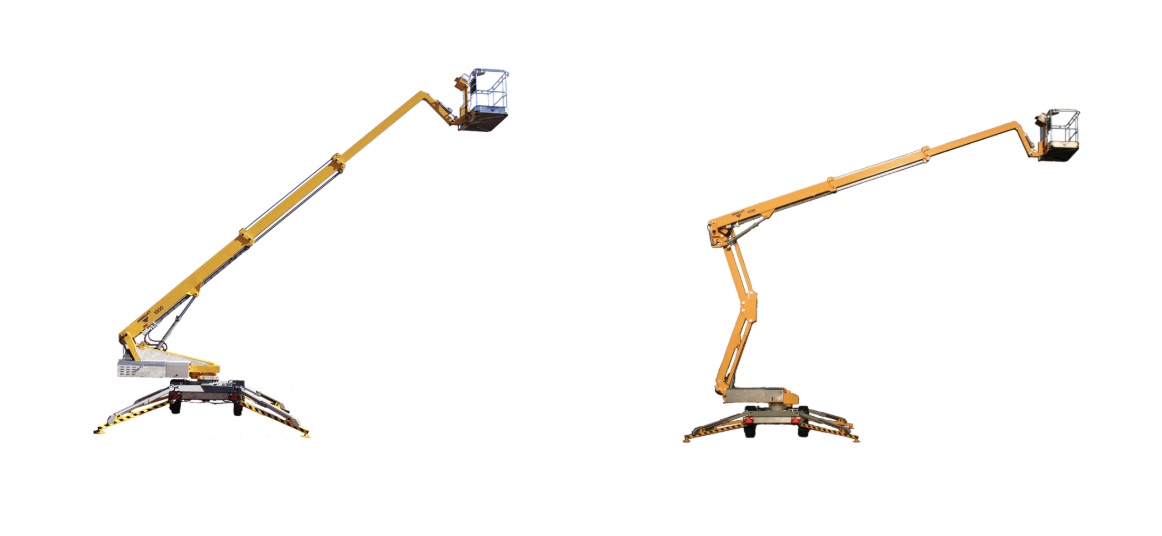
Which lift should I choose?
Five things decide which lift you need: height, outreach, straight or articulating boom, space and your vehicle.
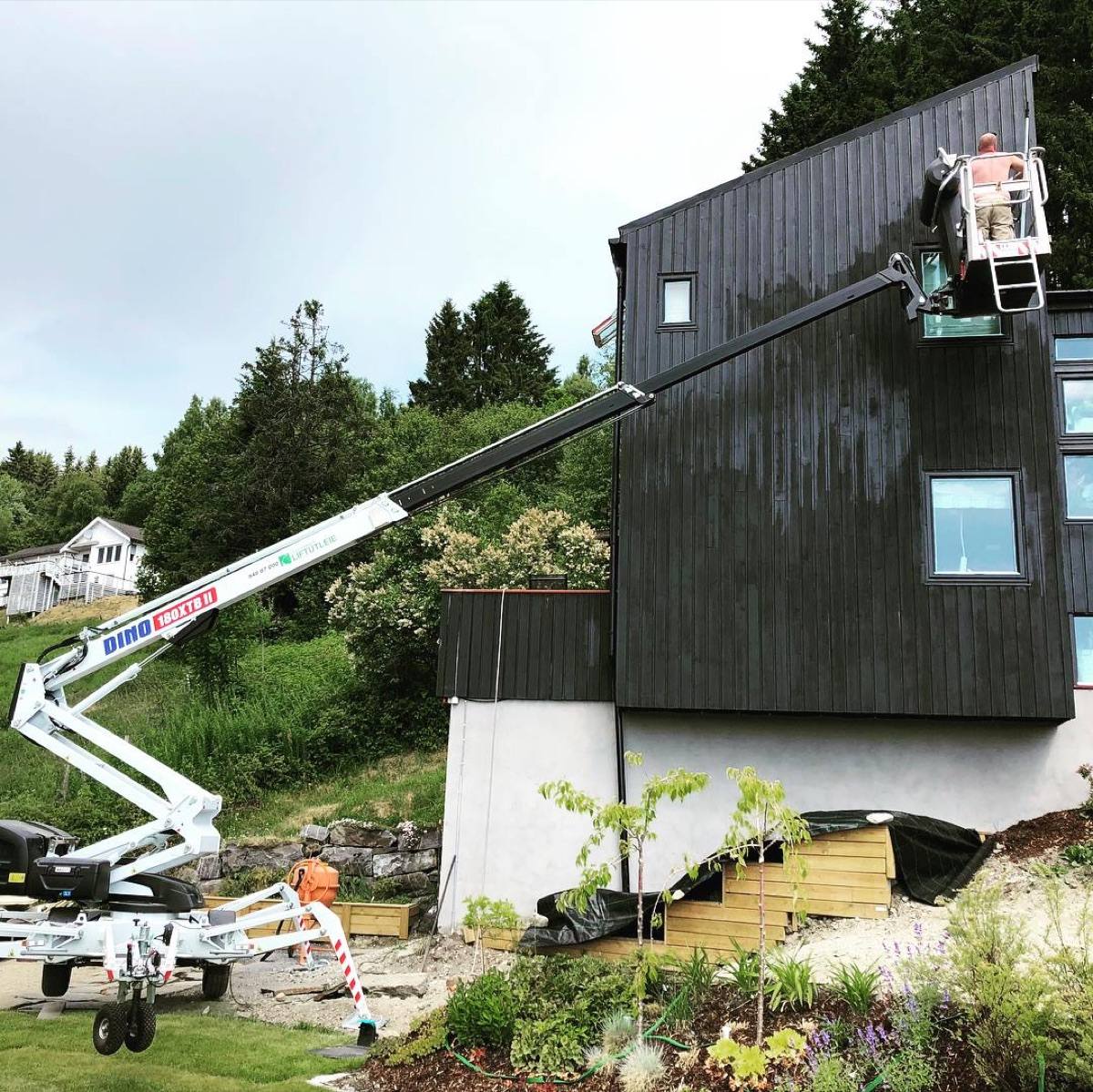
How to use a trailer lift
From the moment the lift is in position until you are safely back down, step by step. With video.
Lift hire prices
What it costs to hire a lift, what is charged in addition, and what applies to weekends and longer rentals.